• Welcome to H4O! For a reduced ad experience, please login or register with the forum.

Extra battery for extended HAM radio operation

LagunaH1

Well-Known Member
Messages
3,733
Location
Idaho
Hi folks,

I'm looking into adding an additional battery for my truck. The battery will be dedicated to operating my radios for extended periods of time, possibly also for driving a HF amplifier and maybe a 110volt inverter. I'll want the battery to charge when the engine runs, and be totally isolated from the rest of the truck's electrical system when the engine is off. I believe a charging relay of some sorts is what I may need for this purpose.

There's still lots of research to do, but so far I'm thinking that the battery could be something along the lines of this: http://www.solar-electric.com/unba250amagm.html

Has anyone done something similar? If so, how did you hook up the extra battery?
 

SuperBuickGuy

Well-Known Member
Messages
3,403
Location
Woodinville, WA
why not a deep cycle battery with a battery isolator (you get from an RV supply store). RV battery so it can handle repeated deep discharges, an isolator so it only charges when the motor is running... My only issue with that is where to put the battery, I'd rather it be in back; however, space is at a premium.
 

DaveK

Well-Known Member
Messages
67
Location
So Cal
I've installed a second battery and a battery isolator/combiner, but the installation is in my H2. With all the room you have in an H1, a similar installation should be no problem. The main battery is an Odyssey 1700 and the second battery is an Odyssey 1500. You can see a write-up here.

I also have an inverter, which is connected directly to the main battery, and with the flick of a switch, both batteries can be connected to power the inverter.
 

LagunaH1

Well-Known Member
Messages
3,733
Location
Idaho
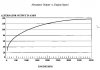
As I'm trying to educate myself on this, I'm realizing that I should probably consider the overall "power budget" and the alternator capacity before I start building anything. I believe the alternator in my truck has a max output of 124 amps, but that's achieved only at very high engine speeds, roughly 3000 rpm. Lower engine RPMs (which is what's happening most of the time) means lower alternator output.

I found this over at the Hummer knowledge base:
alt-out.jpg

If an extra battery is to be useful, it needs to be able to be charged by the alternator under normal conditions.

I need to determine how much load my alternator is under under what I consider "normal" operating conditions:
-Headlights on
-Vent fan on full
-Radios on (probably the least draw of of everything)

Once I know this, I should be able to determine how many amps the alternator in theory could send to the aux battery.

Another question that I don't yet know the answer to is: What effects, if any, will this significantly increased load on the alternator have on the life span of the alternator?
 

DaveK

Well-Known Member
Messages
67
Location
So Cal
In stock form, the alternator for most vehicles is adequate. Unfortunately, I think most wheelers end up adding a lot of accessories and equipment that can exceed the limitations of the stock alternator in a big hurry. Between lights, radios, compressors, inverters, computers, refrigerators, etc., it doesn't take long before the stock alternator starts getting behind. A 100 watt HF radio, for example, can draw more than 20 amps when you key down.

Running an analysis of your power needs can be difficult, especially as your needs will vary considerably depending on how much you will use your accessories and when, but it can be done.

You have a unique situation here that many of the other members may not have, involving a diesel vehicle. If your idle speed is low, you are going to need an alternator that is capable of producing sufficient power at lower RPMs. If your idle speed is around 700 PRM, then you should be OK.

I realized some time ago that my stock alternator (which was like yours at around 125A) was not making the cut and went with a high output 200+A unit from NW Wrangler. Avoiding the unpleasant details, my only comment is that the unit was horrible, especially for a very expensive piece of equipment. It had a one year warranty, and most conveniently, the unit went south about one month after expiration of the warranty. The response to my complaints from Wrangler took the form of an invitation to visit one of my local beaches to pound sand. No more Wrangler products for me.

There are a couple of companies out there that make reliable high output alternators that should serve your needs. I have only heard about Mean Green alternators,(http://www.mean-green.com/ALTERNATORS.html) so you will have to do your own research. In my case I went with a high out put alternator (200+A) from Alterstart, sold under the name of Load Boss (http://www.alterstart.biz/). Price was much less than the Wrangler and is has been in the H2 for almost 5 years. For all these years, it has worked without a single problem, although I did replace the brushes some months ago at my local alternator shop for about $17.

The selection of the right high output alternator for you will depend mostly on what is available for your vehicle, and not so much on your power requirements. For Load Boss, there currently are only two options, 200+A and a 275A and both will produce from 110 to 140 amps at idle and maximum output at around 1600-1700 RPM.

Good luck!
 

LagunaH1

Well-Known Member
Messages
3,733
Location
Idaho
Great points about alternator output and engine speeds. I recall reading about that very topic somewhere and someone was saying that the "high output" alternator they had found was not working well for them because it required too many RPM's / too high idle speed to get the output they needed.

Yup, I'm pretty sure the H1 idles right around 700 rpm.
 

MaxPF

AGNTSA
Messages
1,394
Location
The dark side of the globe
Got in late on this thread. I used a Sure Power diode-type isolator with my second battery until it died. It was a 15 year old isolator rated at only 95 amps. Sure Power makes bigger ones, so make sure you get one appropriately sized. They also make some that use Schottky diodes, which have lower drop and thus higher efficiency. Solenoid-type isolators also work well, but I like the fact that the diode isolators have no moving parts.

FWIW, I have run my Icom 2720H for 6 hours on one battery (Optima Red Top at that time, before it died) in cross-band repeat mode with no issues. Obviously, the radio is receiving 99% of the time, which doesn't use much power. The battery was still at 12.2V after 6 hours of use.
 
Messages
1,248
Location
New Jersey
Putting the cost aside, would it be better to just get a much larger and stronger battery(such as an Odyssey 2150 I believe, which would need a custom mount under the hood), or the dual battery system(Odyssey batteries, just smaller)? (All for say the equal amount of equipment such as multiple lights, radios, winch, laptop, etc) and is it ok to just hook two batteries to each other? Or is the isolator unit a much more useful idea? Sorry for getting a little off the subject.
 

MaxPF

AGNTSA
Messages
1,394
Location
The dark side of the globe
Dual battery with an isolator means you can discharge one battery while the other stays charged so you can still start your vehicle. You can run dual (or more) batteries in parallel, but they have to be the same brand, type, and size, and when one dies you should really replace both.
 

abearden

Well-Known Member
Messages
609
Location
N. Idaho
Lots of fun stuff you can do depending on what your goal is. The other benefit to two half-size batteries is you don't have to find one large area to stuff it under the hood and lifting one large battery out is a pain in the back.

Laguna, you ever decide what you were going to do or did the H1's hissy fit prevent that?
 

LagunaH1

Well-Known Member
Messages
3,733
Location
Idaho
I never got that far :)
Right now the H1 has a pretty long list of more important things that needs to be taken care of first :)

Sent from my SAMSUNG-SM-N900A using Tapatalk
 
Top